Launch offer — valid today only

📄 Digital book in PDF · read it on your phone or print it

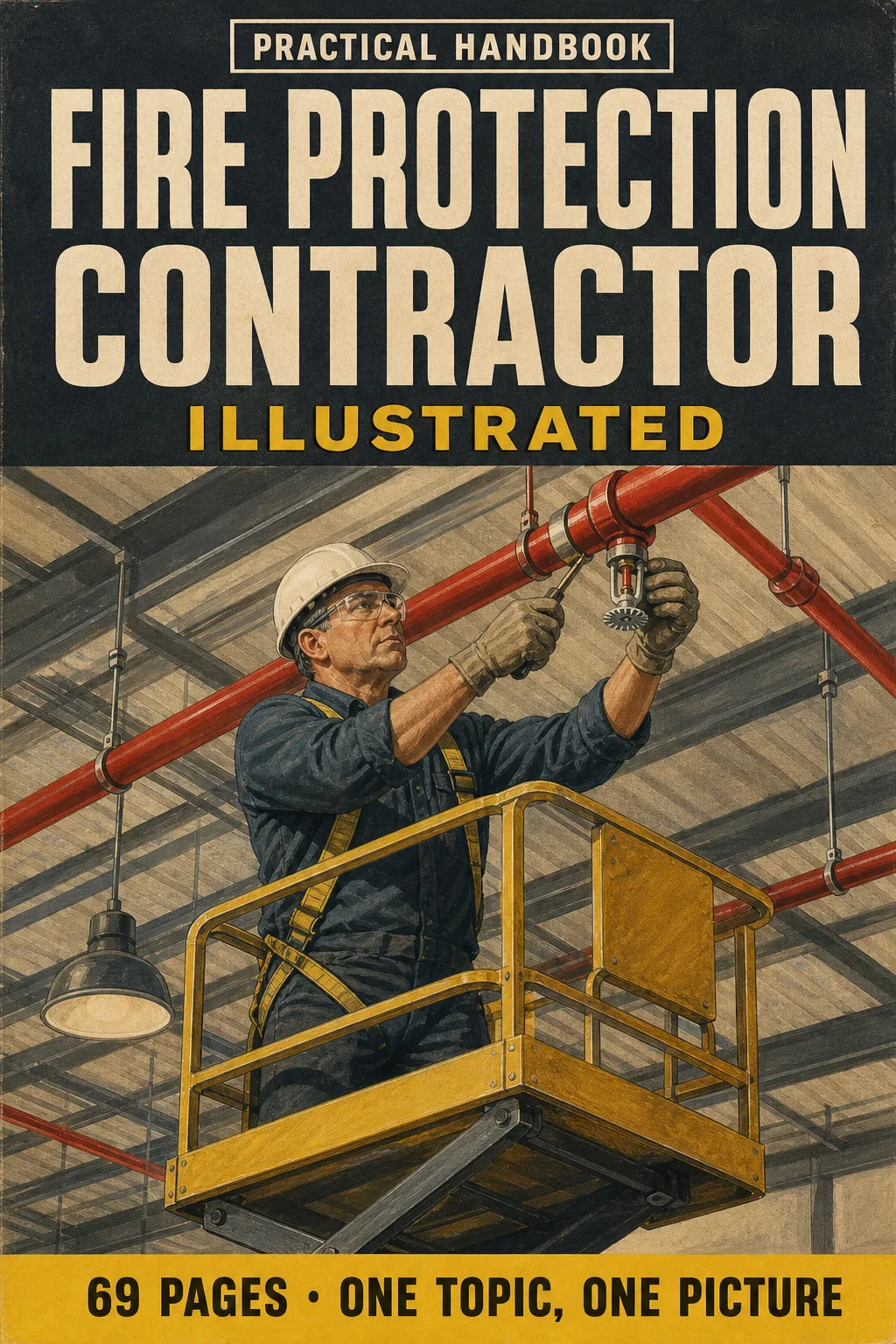
The Fire Sprinkler Contractor Exam in Drawings: the Code Behind the Work You Already Do One Topic on Every Page

Wet, dry, preaction and deluge systems, sprinkler heads, hangers and seismic bracing, spacing and obstructions, hazard classes, hydraulic calcs, standpipes, fire pumps and acceptance testing. Each topic gets its own page: the drawing first, then what you need to remember. 69 illustrated pages.

START STUDYING THIS WAY

🔒 Secure checkout · PDF by email · 30-day guarantee

Every topic, its own pageEach system, rule and calc drawn, with the explanation right beside it
69 illustrated pages9 parts, from the four system types to exam-day review
Up-to-date sourcesBuilt on NFPA 13, 14, 20 and 25, with every code value marked to check against your state's edition
PDF by emailFormat

Look Inside the Book

Every page has one big drawing and a box with the numbers and rules you need to know:

California C-16: Installation 36%, Planning 25%, Safety 21%, closed book, editions set by the bulletin.
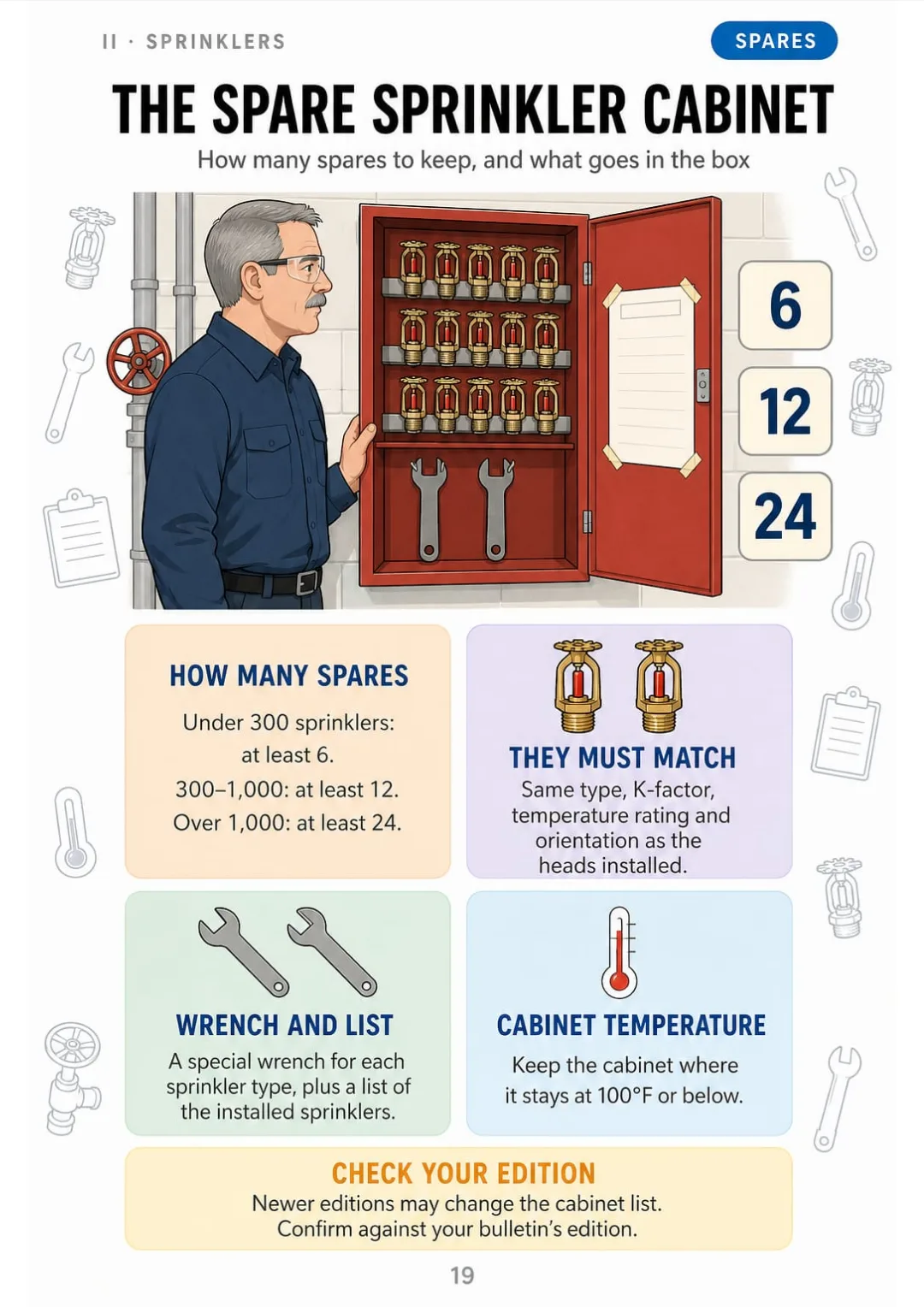
Spare heads: 6 up to 300 sprinklers, 12 up to 1,000, 24 above, cabinet at 100°F or less.
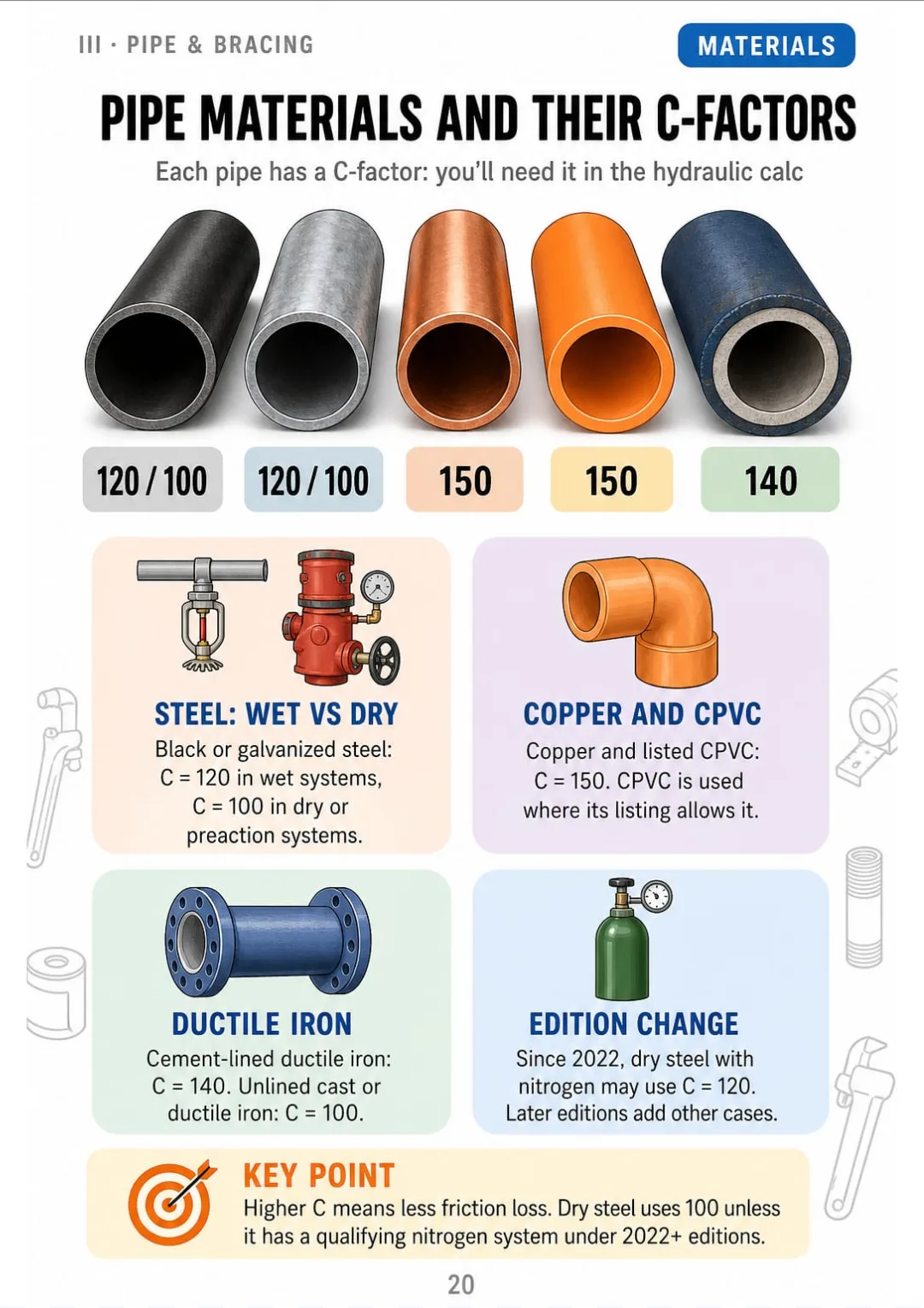
Steel 120 wet, 100 dry · copper and CPVC 150 · lined ductile iron 140 (NFPA 13).
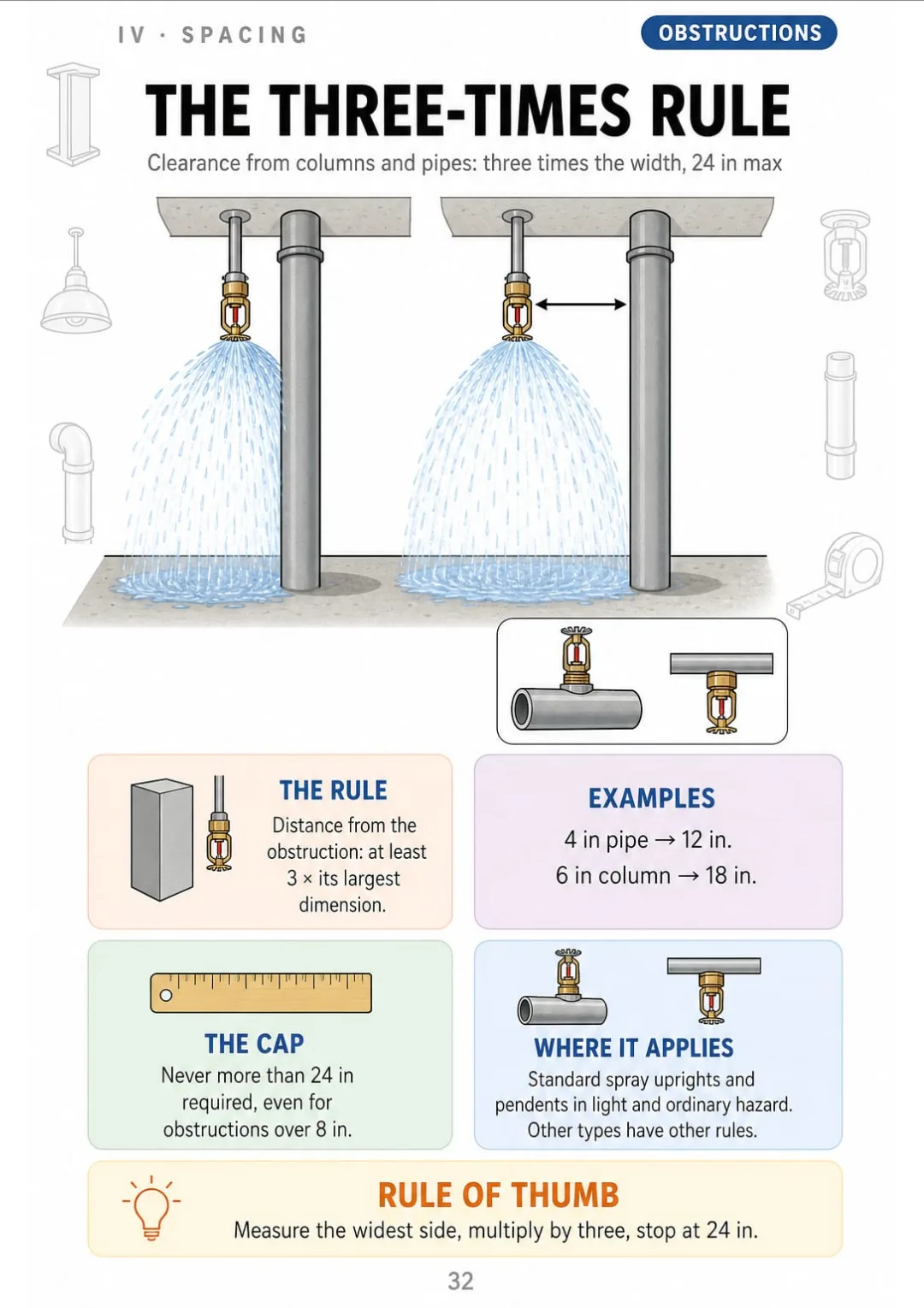
3 × the obstruction, max 24 in: a 6 in column needs 18 in
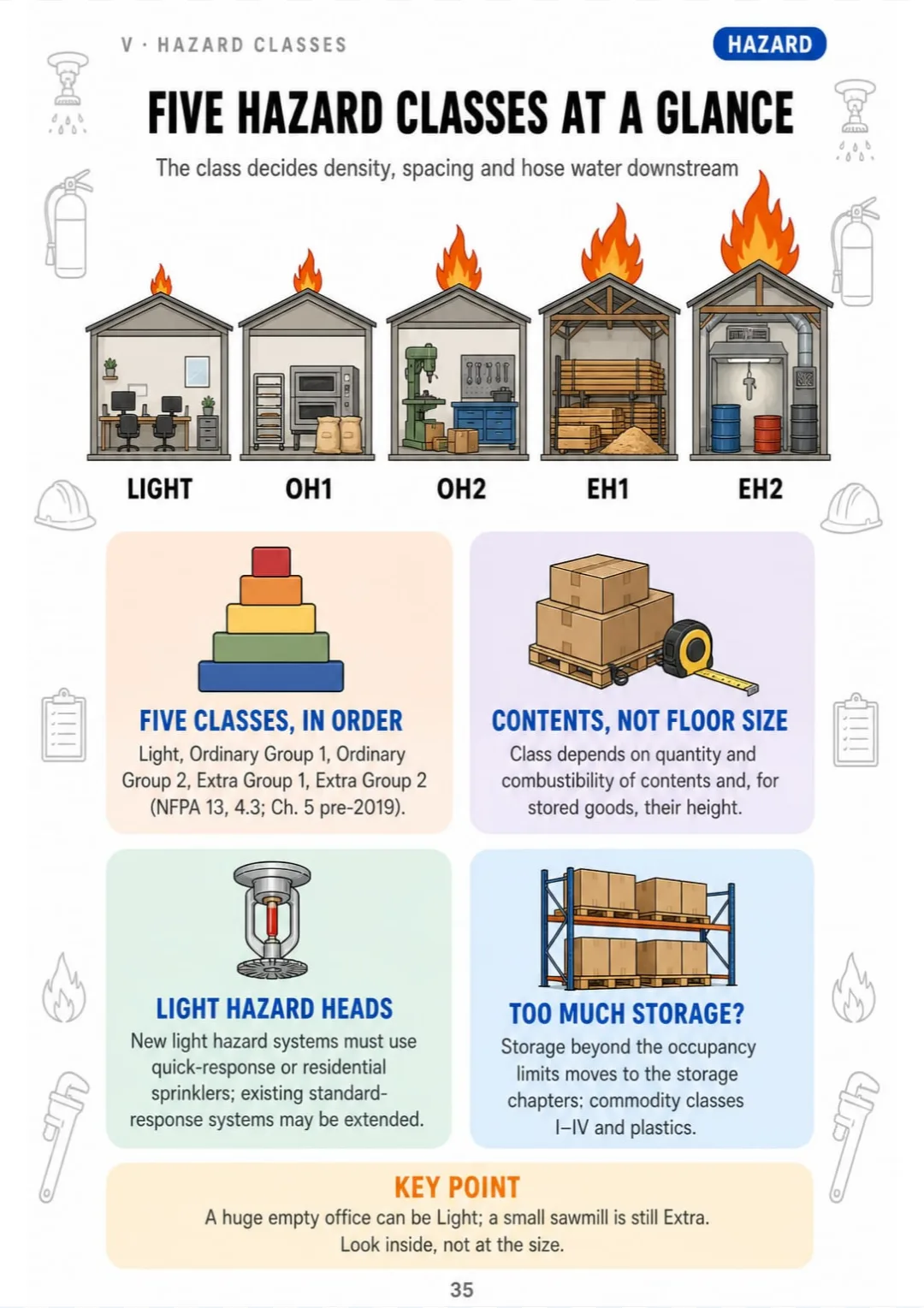
Light, OH1, OH2, EH1, EH2: the class comes from the contents, not the floor area.
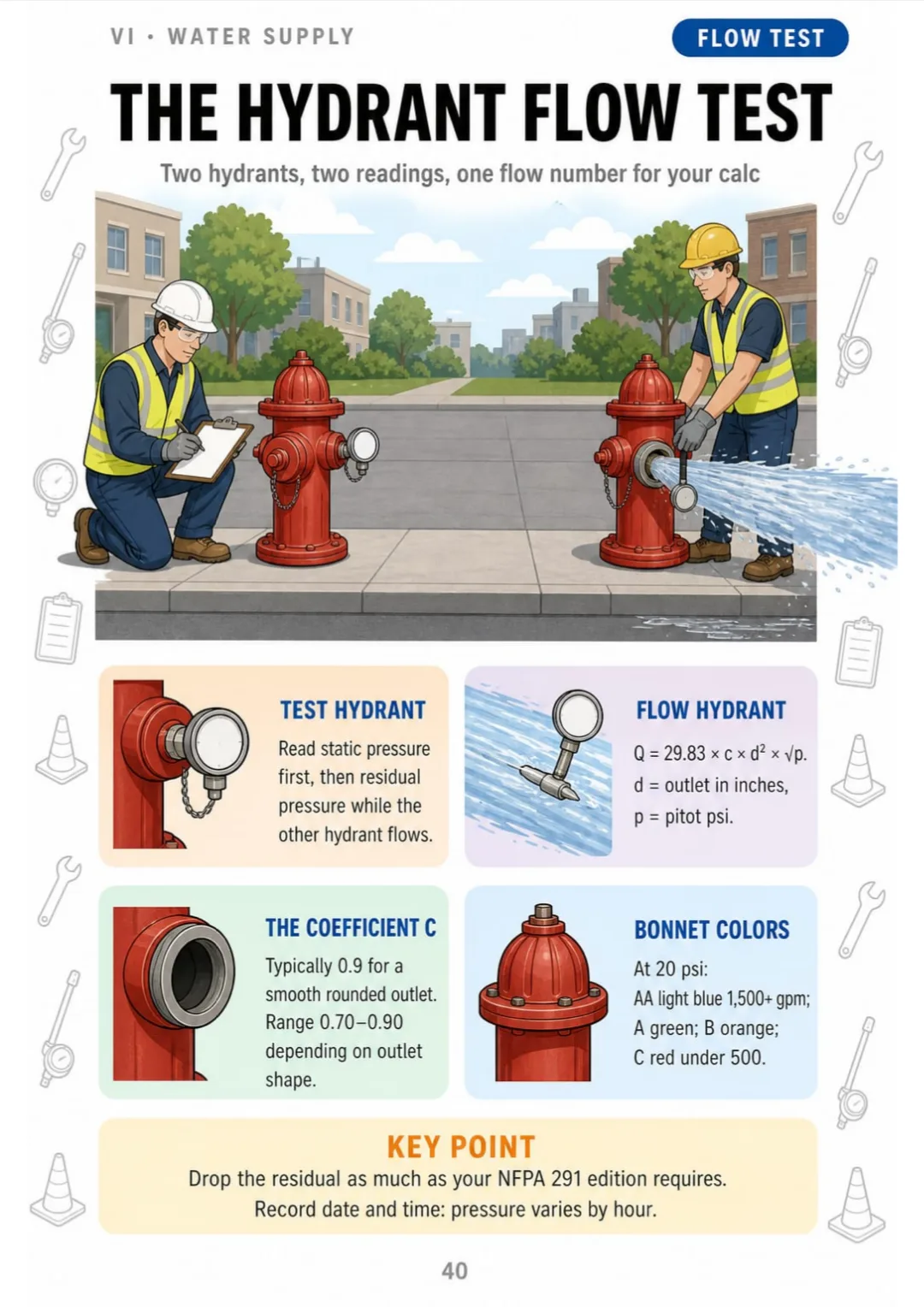
Q = 29.83 × c × d² × √p, with at least a 10% residual drop (25% in the 2019 edition)
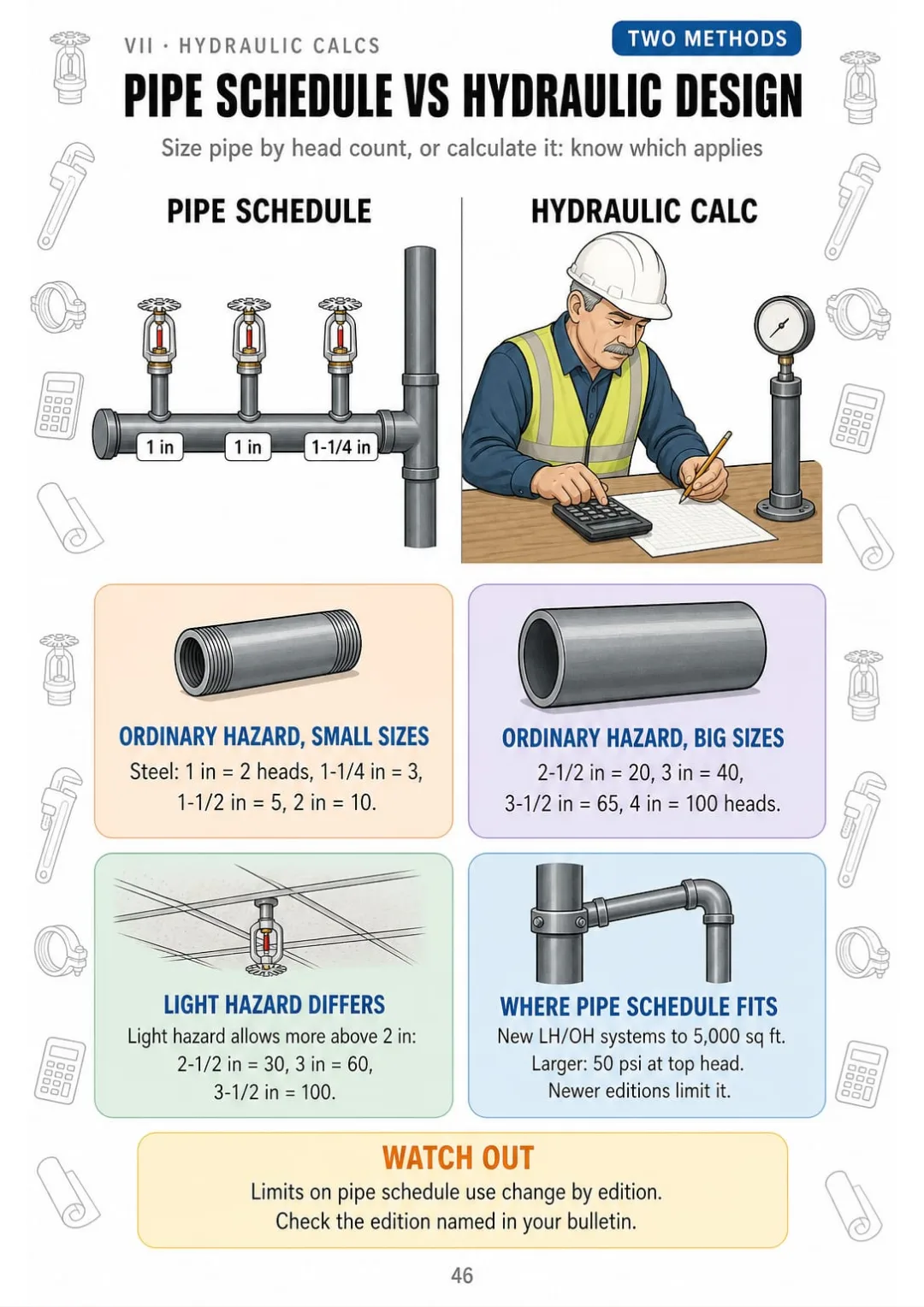
Ordinary hazard steel: 1 in feeds 2 heads, 4 in feeds 100, where pipe schedule is permitted.
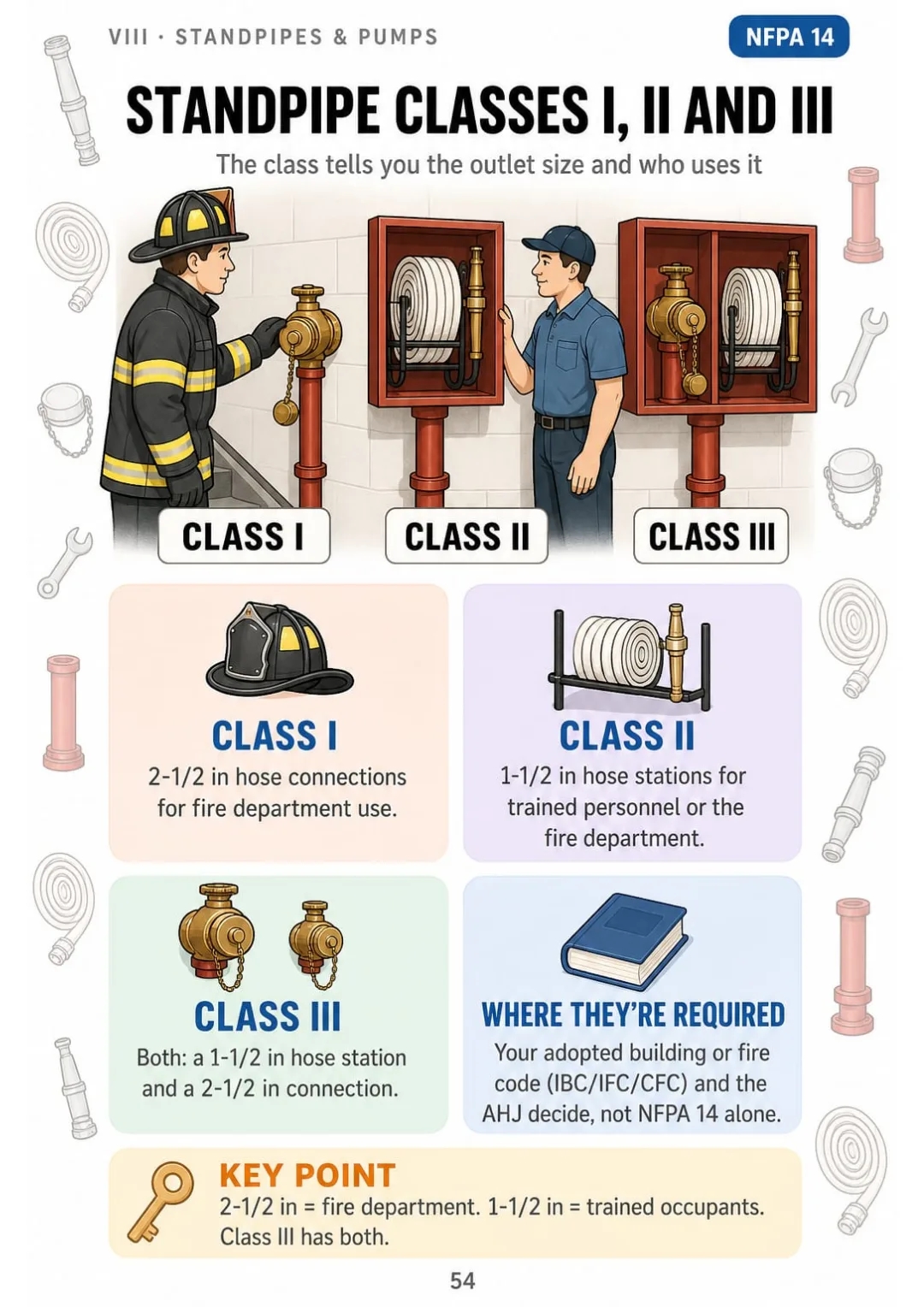
Class I 2-1/2 in, Class II 1-1/2 in, Class III both: NFPA 14 definitions, drawn.

Swipe to see more →

These are real pages from the book. The table of contents is the full one: 9 parts and 65 topics.

The Problem Isn't You. It's How It Was Explained to You.

It's ten at night at the kitchen table, and a practice question asks for the C-factor of steel pipe in a dry system. You've hung that pipe for twenty years.

The answer sits in a paragraph of code text, somewhere between friction loss and pipe schedules. You read it, you nod, and by morning it's gone, because nothing on the page ties that number to the pipe you handle every day.

Steel 120 wet, 100 dry · copper and CPVC 150 · lined ductile iron 140 (NFPA 13).

In this book, pipe materials and their C-factors are one page. Steel is drawn wet and dry side by side, 120 and 100. Next to it, copper and CPVC at 150 and lined ductile iron at 140. The number sits right on the pipe.

The same goes for the anatomy of a sprinkler, coverage area S × L, the hydrant flow test, the five hazard classes and standpipe Classes I, II and III. Each one gets its own page.

You see why a dry system gets the lower number, and when the question comes up, you answer it without reaching for the code book.

COMPARE FOR YOURSELF

The Same Topic, Two Ways to Study It

THIS
  • The manual: line after line
  • Sprinkler parts explained only in words
  • You walk into the exam second-guessing yourself
An automatic sprinkler consists of a frame, generally of cast brass, incorporating the threaded inlet and the orifice through which water is discharged. The orifice is sealed by a cap retained in position by a heat-responsive operating element, which may consist of a frangible glass bulb containing an expanding liquid or a fusible solder link. Upon operation, the released water stream impinges upon the deflector, which distributes it in a predetermined pattern, while the wrench boss permits installation without damage to the frame or element.
FOR THIS
  • The sprinkler drawn and labeled
  • The parts and numbers in one box
  • You see it and you get it
Spare heads: 6 up to 300 sprinklers, 12 up to 1,000, 24 above, cabinet at 100°F or less.
CONTENTS

Take a Look at the 9 Parts and 65 Topics

The exam and the four systems, sprinklers, pipe, hangers and bracing, spacing and obstructions, hazard classes, water supply and the riser, hydraulic calcs, standpipes and fire pumps, testing and exam review: 69 pages, all illustrated.

IThe Exam, the Code and the Four Systems · pp. 5-12
  1. How Your State Trade Exam Is Built
  2. The Map of NFPA 13 (and Where 13R and 13D Fit)
  3. Wet Pipe System
  4. Dry Pipe System
  5. Dry System Size, QOD and Water Delivery Time
  6. Preaction: Non-Interlock, Single and Double Interlock
  7. Deluge System
  8. Wet, Dry, Preaction, Deluge: Side by Side
IISprinklers · pp. 13-19
  1. Anatomy of a Sprinkler
  2. Temperature Ratings and Bulb Colors
  3. Near Heat Sources: When to Go Up a Rating
  4. K-Factor and Q = K√P
  5. Orientation: Upright, Pendent, Sidewall, Concealed
  6. Response Type and Special Sprinklers
  7. The Spare Sprinkler Cabinet
IIIPipe, Hangers and Seismic Bracing · pp. 20-27
  1. Pipe Materials and Their C-Factors
  2. Joining Pipe: Threaded, Grooved, Welded, Cemented
  3. Hanger Components and Rod Sizes
  4. Maximum Distance Between Hangers
  5. End of Line and Armovers
  6. Why Seismic Bracing and Flexible Couplings
  7. Sway Braces: Lateral, Longitudinal and 4-Way
  8. Clearance Through Walls and Floors
IVSpacing and Obstructions · pp. 28-34
  1. Coverage Area: S × L
  2. Maximum Coverage and Spacing by Hazard
  3. Distance to Walls and Between Heads
  4. Deflector Distance Below the Ceiling
  5. The Three-Times Rule
  6. The Beam Rule
  7. Wide Obstructions and Clearance to Storage
VHazard Classes and Design Criteria · pp. 35-39
  1. Occupancy Hazard Classes at a Glance
  2. Picking the Class: Examples from the Annex
  3. Storage: Commodity Classes and High-Piled
  4. Density/Area Curves
  5. Hose Stream Allowance and Duration
VIWater Supply, Riser and Valves · pp. 40-45
  1. The Hydrant Flow Test (NFPA 291)
  2. Plotting the Supply Curve
  3. Underground, Backflow and the City Connection
  4. The Riser Assembly
  5. The Fire Department Connection
  6. Inspector's Test Connection and Waterflow Alarms
VIIHydraulic Calcs, Step by Step · pp. 46-53
  1. Pipe Schedule vs Hydraulic Design
  2. The Remote Area and How Many Heads Flow
  3. The First Head: Flow and Pressure
  4. Friction Loss: The Hazen-Williams Formula
  5. Fittings and Equivalent Length
  6. Elevation: 0.433 psi per Foot
  7. Balancing Flows Where Pipes Meet
  8. Total Demand vs Water Supply
VIIIStandpipes and Fire Pumps · pp. 54-60
  1. Standpipe Classes I, II and III
  2. Standpipe Types: Wet, Dry, Manual, Automatic
  3. Standpipe Flow, Pressure and Location
  4. Fire Pump Types
  5. Reading a Fire Pump Curve
  6. Pump Room Piping
  7. Jockey Pump and Pressure Settings
IXTesting, Inspection and Exam Review · pp. 61-69
  1. Flushing Before Connecting
  2. Hydrostatic Test: 200 psi for 2 Hours
  3. Dry Pipe Air Test and Trip Test
  4. Main Drain Test
  5. The Contractor's Material and Test Certificate
  6. NFPA 25 Inspection Frequencies
  7. When to Replace Sprinklers and Gauges
  8. The Numbers to Have at Hand on Exam Day
  9. Common Mistakes in the Hydraulic Calc

One Page, One Topic, All Clear

Think of it this way:

You're on the exam, and a question gives you a Light Hazard room and asks for the maximum coverage per head. Or you're on a job, and the inspector asks why a head sits exactly where it does.

You open the coverage area page: S × L drawn on a ceiling grid, 12 ft by 10 ft = 120 ft², with the wall distance doubled to get S. One drawing, and the rule is clear.

Light, OH1, OH2, EH1, EH2: the class comes from the contents, not the floor area.

The same goes for the riser assembly, the beam rule, the hydrant flow test, the first head in a hydraulic calc and the main drain test: each one on its own page.

Fire Protection Contractor Illustrated is 9 parts and 69 illustrated pages, and it ends with the numbers to have at hand on exam day and the most common mistakes in the hydraulic calc.

What you see drawn, you don't have to memorize.

What's Inside Fire Protection Contractor Illustrated:

Ipp. 5-12

The Exam, the Code and the Four Systems

How your state trade exam is built, the map of NFPA 13 with 13R and 13D, and the wet, dry, preaction and deluge systems drawn side by side.

IIpp. 13-19

Sprinklers

Sprinkler anatomy, temperature ratings and bulb colors, heat sources, K-factor and Q = K√P, orientation, response type and the spare sprinkler cabinet.

IIIpp. 20-27

Pipe, Hangers and Seismic Bracing

Pipe materials and C-factors, joining methods, hanger components and spacing, end of line, seismic bracing, sway braces and clearances.

IVpp. 28-34

Spacing and Obstructions

Coverage area S × L, maximum spacing by hazard, distance to walls, deflector distance, the three-times rule, the beam rule and wide obstructions.

Vpp. 35-39

Hazard Classes and Design Criteria

Occupancy hazard classes, picking the class with annex examples, storage commodities, density/area curves and hose stream allowance.

VIpp. 40-45

Water Supply, Riser and Valves

The hydrant flow test, plotting the supply curve, underground and backflow, the riser assembly, the FDC and the inspector's test connection.

VIIpp. 46-53

Hydraulic Calcs, Step by Step

Pipe schedule vs hydraulic design, the remote area, the first head, Hazen-Williams, equivalent length, elevation, balancing flows and demand vs supply: you follow a hydraulic calc step by step, always in the same order.

VIIIpp. 54-60

Standpipes and Fire Pumps

Standpipe classes and types, flow, pressure and location, fire pump types, reading a pump curve, pump room piping and the jockey pump.

IXpp. 61-69

Testing, Inspection and Exam Review

Flushing, the hydrostatic test, dry pipe air and trip tests, main drain, the material and test certificate, NFPA 25 frequencies and exam-day numbers.

At the end of the book: A one-page list of the numbers to have at hand on exam day and the most common mistakes in the hydraulic calc.
Plus: 2 Free Books

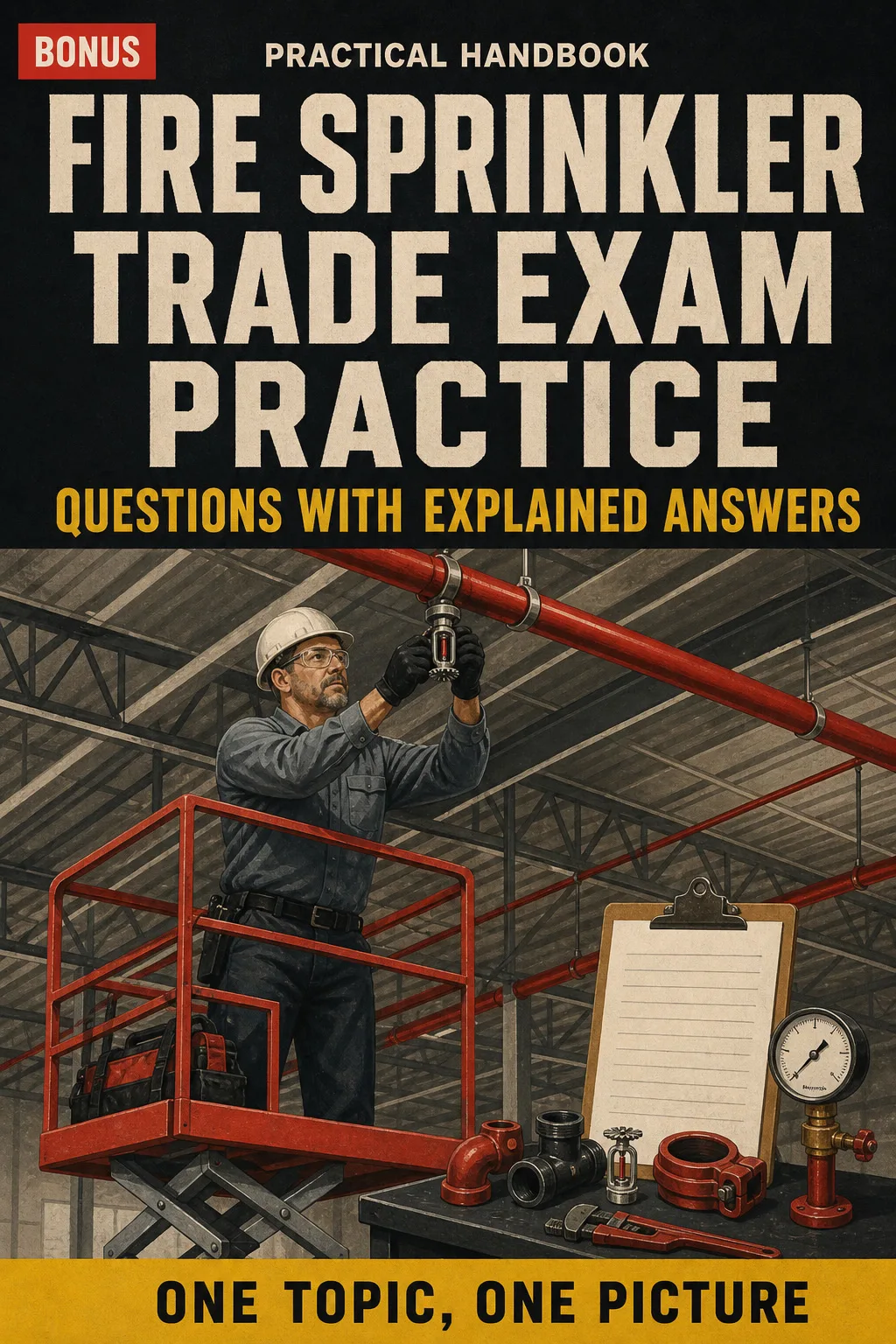
Fire Sprinkler Trade Exam Practice: Questions with Explained Answers

BONUS 1: «Fire Sprinkler Trade Exam Practice: Questions with Explained Answers»

Value on its own: US$ 17.90

Practice exam-style questions on every chapter, with the answer and the drawing that explains it, so you find your weak spots before exam day.

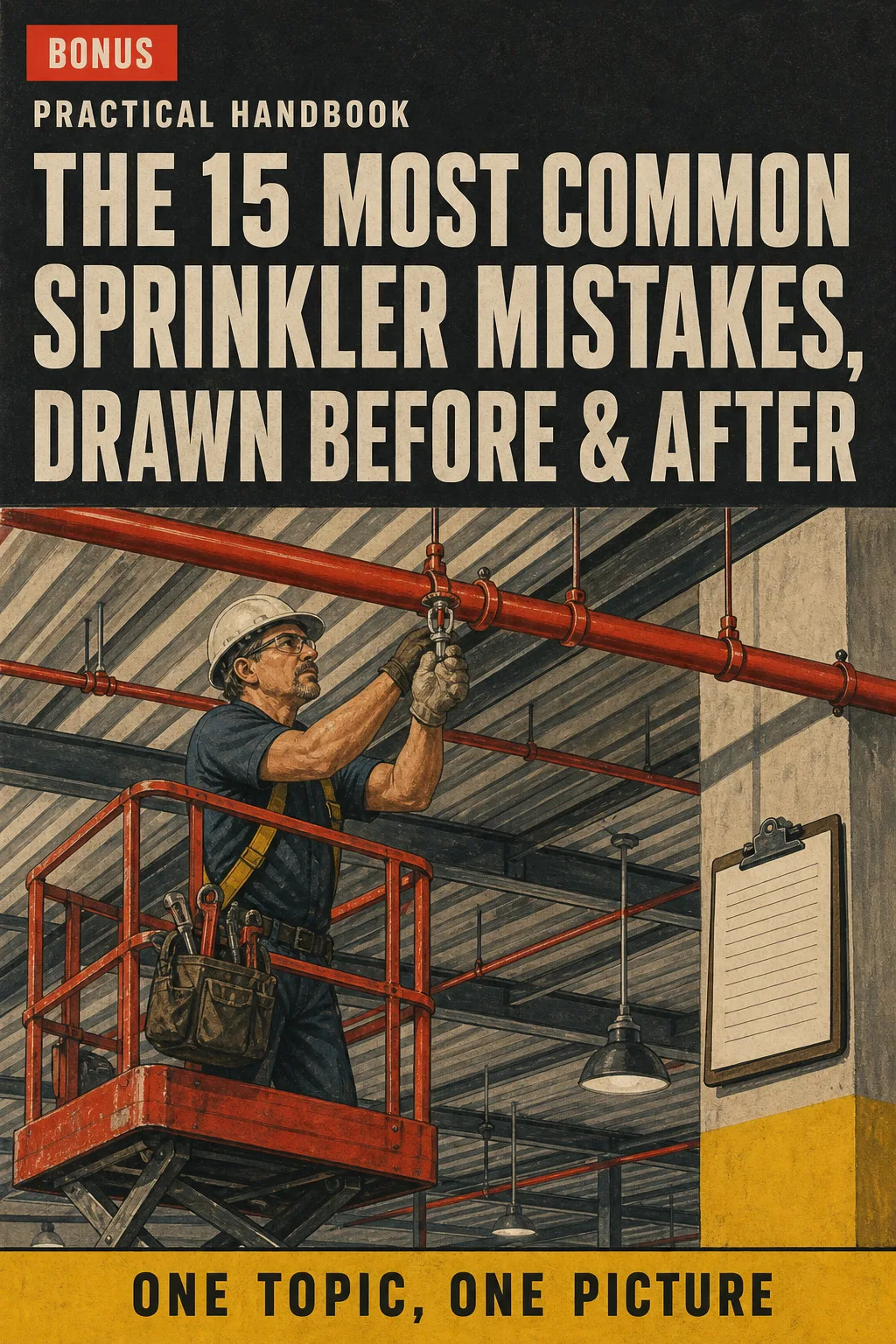
The 15 Most Common Sprinkler Mistakes, Drawn Before & After

BONUS 2: «The 15 Most Common Sprinkler Mistakes, Drawn Before & After»

Value on its own: US$ 14.90

The installation errors that come up most often (spacing, obstructions, hangers, test procedures) shown wrong and right side by side, so you review them at a glance.

Fire Protection Contractor Illustrated with 2 Free Books

  • Fire Protection Contractor Illustrated: 69 illustrated pagesUS$ 63
  • BONUS 1: Fire Sprinkler Trade Exam Practice: Questions with Explained AnswersUS$ 17.90
  • BONUS 2: The 15 Most Common Sprinkler Mistakes, Drawn Before & AfterUS$ 14.90
  • High-resolution PDF to printIncluded
Total value US$ 95.80
YOUR PRICE:
US$ 27
You save US$ 68.80
YES, I WANT FIRE PROTECTION CONTRACTOR ILLUSTRATED FOR US$ 27

📄 This is a digital PDF book sent to your email: nothing is printed or shipped.

Secure purchaseEncrypted payment30-day guarantee

PDF by email: We email you Fire Protection Contractor Illustrated as a PDF, together with the two free books. It's a single payment: no installments, no extra charges.

Who This Book Is For

You're studying for your license

You're studying for your license

You've done the work for years. Now you see the code behind it, one drawing per topic, in the order the exam asks it.

Your exam date is set

Your exam date is set

You review hazard classes, coverage, hydraulic calcs and test values page by page, and the practice questions show you where you're weak.

You already run crews or a company

You already run crews or a company

You keep the why of every rule at hand, and you have a clear page to show an apprentice why the riser, the drain and the test go where they go.

Everything You Get Today

US$ 95.80US$ 27
YES, I WANT FIRE PROTECTION CONTRACTOR ILLUSTRATED FOR US$ 27

📄 This is a digital PDF book sent to your email: nothing is printed or shipped.

30DAYS
GUARANTEE

30-Day Guarantee

Try Fire Protection Contractor Illustrated for 30 days, bonus books included.

We refund everything if the file won't open, if the book isn't what you see here, if you were charged twice or if the email doesn't arrive. Just email us.

You pay once. No subscriptions.

Frequently Asked Questions

Is it for me if I've been a sprinkler fitter for years and now want my contractor license?

Yes. It isn't a beginner's book: it goes straight to what the exam asks and explains the why behind what you already do on the job.

Does it work for my state's exam, or only for California's C-16?

It's built on NFPA 13, 14, 20 and 25 and on published exam outlines, such as the CSLB candidate bulletin for the C-16. Trade exams differ by state, and each state adopts its own code edition, so check the values against the edition your exam bulletin names.

Is it official material?

No. It's an independent illustrated study guide, not published or endorsed by NFPA, CSLB or any licensing board. It doesn't give a certificate, a license or continuing education hours.

Does it replace a prep course or the code book?

No. It doesn't replace training or your own copy of the code if your exam is open book. It shows you where to look and what it means.

Are the practice questions the ones on the exam?

No. They're written for this book to help you review. They aren't official questions from any exam.

When and how do I get it?

The book and the 2 bonus books come as PDFs by email, sent to the address you enter at checkout.

Do I have to pay every month?

No. It's a one-time payment with no subscription.

Can I have it on paper?

Yes. It's a PDF, so you can print the whole book or just the pages you want to keep on the clipboard.

How does the refund work?

You have 30 days. We refund everything if the file won't open, if the book isn't what you see on this page, if you were charged twice or if the email doesn't arrive: just email us.

Before You Close This Page

No more rereading the code with nothing sticking.

C-factors, coverage and standpipe classes: you see them drawn, and they stick.

You walk into the exam knowing where everything is.

Drawings make studying faster.

The book is right below.

One-time payment: US$ 27 · Guarantee: 30 days · PDF by email

YES, I WANT FIRE PROTECTION CONTRACTOR ILLUSTRATED FOR US$ 27

📄 This is a digital PDF book sent to your email: nothing is printed or shipped.